
Same day or next day service
£No hidden costs
Fully insured
365 day guarantee*
Nationwide
Telford

Plumbing enquiries in Dawley

Dawley is one of the original communities at the heart of what became Telford, with roots as a market and mining town.

Call us on 01952 000000 (placeholder - not in service)
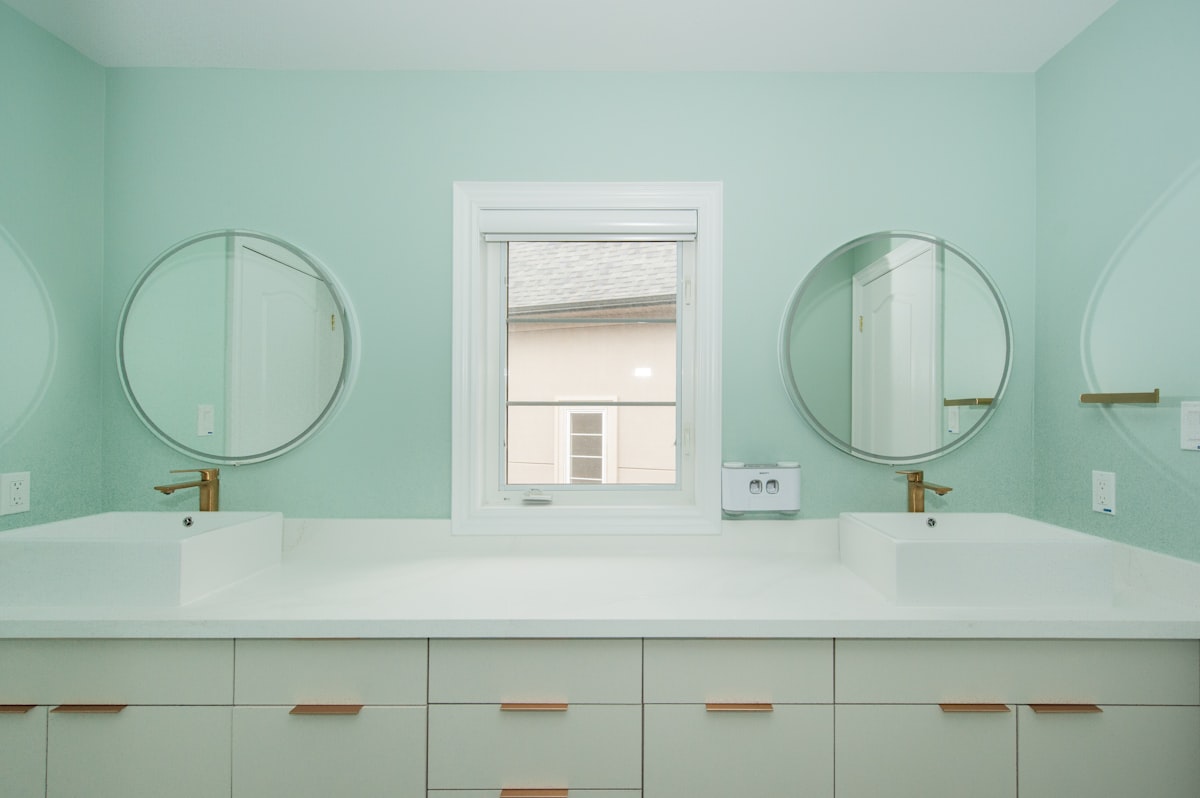
Illustrative stock photograph of bathroom basins; not a Telford customer job.

Plumbing enquiries in Dawley

Dawley is one of the original communities at the heart of what became Telford, with roots as a market and mining town. Its residential streets mix pre-war terraced and semi-detached properties with post-war housing and more recent development.

This range of building eras means plumbing systems found in Dawley properties can vary considerably from one road to the next. A consideration for older Dawley properties — particularly those built before the 1960s — is the potential presence of lead supply pipework.

Lead was commonly used for the section of pipe connecting the water main to internal fittings. The regional water authority is responsible for the lead supply pipe up to the property boundary, while homeowners are responsible for any lead pipework inside the property.

A plumber can assess whether lead pipes are present and advise on replacement options. Tap and toilet repairs are among the most frequent plumbing enquiries across the borough.

A running toilet cistern or a dripping tap may appear minor, but both waste a measurable volume of water over time. On a metered supply, this translates directly into higher bills.

In many cases, internal components such as washers, diaphragms and float valves can be replaced without changing the whole fitting. Central heating systems in older Dawley properties may benefit from periodic condition checks.

Cold patches in radiators, valves that no longer close properly, and unusual noise during operation are all signs that a system assessment is warranted. Identifying faults early generally allows simpler, less disruptive repairs than waiting until a component fails completely.

Plumbing warning signs in Dawley properties

⚠️

Continuous cistern noise after flushing

A hissing or trickling sound from the toilet cistern that continues well after a flush has completed indicates that water is not being cut off correctly. The cistern may be overfilling and discharging through the overflow pipe, or the flap valve may not be sealing properly when the cistern is full. Either way, water is being wasted continuously and the cause should be assessed by a plumber.

⚠️

Discoloured or metallic-tasting tap water

Tap water that appears brown or slightly cloudy — particularly when first opened in the morning — or that has a noticeable metallic taste, may indicate corrosion inside older supply pipes. In properties with original pipework predating the 1960s, this could involve lead pipework. Do not continue using the water for drinking or cooking until the source has been identified and assessed by a plumber.

What to prepare before a plumbing assessment in Dawley

1

Locate and test the stopcock

The main stopcock controls the water supply to the entire property. In Dawley's older housing it is most often found under the kitchen sink, but it may also be in a meter box in the pavement or beneath a cover near the front of the property. Check that it operates correctly by turning it a quarter-turn clockwise and back. A stopcock that has seized cannot shut off the supply in an emergency and is itself a fault worth mentioning when making an enquiry.

2

Check whether the property has a water meter

Water meters are fitted at the property boundary or inside the property near where the supply enters. If you have one, note its location and the current reading before a plumber arrives. A sudden increase in readings compared with a previous period can indicate a hidden leak — particularly useful if you suspect a slow leak inside a wall or beneath a floor. A plumber can carry out a static pressure test to assess whether water is escaping from the internal system.

3

List the affected fittings in order of priority

If you have several plumbing concerns — a dripping tap, a slow drain and a radiator fault — listing them in priority order before the plumber arrives helps structure the visit efficiently. Note when each problem first appeared and whether it has changed. A toilet that has been running continuously for weeks behaves differently from one that only started recently, and this context helps the plumber focus their assessment on the most likely cause first.

Complete Plumbing Services Across Telford

Whatever the job, we've got you covered. From plumbing repairs to planned installations.

Plumbing questions in Plumbing enquiries in Dawley

How can I tell whether my Dawley property has lead supply pipes?
Lead pipes are dull grey, have a slightly uneven texture compared with copper, and are soft enough that pressing a key lightly against the surface leaves a mark. They are most commonly found in the pipework under the kitchen sink running to the stopcock, or below ground from the point where the supply enters the property. If you are unsure of the material, a plumber can confirm during a visit and advise on replacement if lead pipework is identified.
My toilet keeps running after flushing. Is this worth dealing with?
Yes. A continuously running toilet cistern wastes a significant volume of water, and on a metered supply this directly increases your bill. The most common causes are a worn flap valve that no longer seals when the cistern fills, a float valve set too high that allows water to escape through the overflow, or a damaged siphon assembly. All of these are standard components that a plumber can check and replace without needing to change the entire toilet fitting.
When should I replace a radiator rather than just continuing to bleed it?
Bleeding removes air that has accumulated inside a radiator — a routine maintenance step. However, if a radiator needs bleeding very frequently, air is entering the system rather than simply being displaced. This may point to a failing automatic air vent, a pump fault, or a pinhole corrosion leak introducing air into the circuit. If a radiator has visible external corrosion, leaks from the body, or a valve that no longer closes properly, replacement may be more practical than further repair. A plumber can assess individual radiators and advise on whether repair or replacement is the more appropriate option.
Brown or discoloured water is coming through the taps in my Dawley property. What might be causing this?
Discoloured water in an older property is commonly caused by sediment or corrosion products disturbing from galvanised steel or iron pipework that has aged over time. It can also follow work on the supply main in the street, which can disturb deposits inside the mains pipework. If the discolouration clears after running the cold kitchen tap for a short period, it is often a temporary disturbance. If it persists or recurs, or affects hot water as well as cold, a plumber can inspect the supply pipework within the property and advise on whether any section requires attention or replacement.
My kitchen tap in Dawley has noticeably lower pressure than other taps in the same property. What might explain the difference?
A significant pressure difference between the kitchen tap and other outlets in the same property can indicate a restriction in the branch pipework supplying that fitting. In older properties this is sometimes caused by scale or corrosion that has narrowed the internal bore of the pipe over time. A blocked aerator or flow restrictor fitted to the tap outlet is another common cause, as mineral deposits can accumulate and reduce flow to a single fitting without affecting others. A plumber can check the supply to the affected tap and establish whether the restriction is in the fitting itself or in the pipework feeding it.
I have found water on the floor near my boiler in Dawley. Should I be concerned?
Water found near a boiler should be investigated without delay, as several different components can be the source. A pressure relief valve that is discharging, a leaking condensate drain connection, or a weeping joint on the heat exchanger are among the more common causes. Water in the vicinity of electrical components presents a safety risk and the area should not simply be mopped up and left without identifying the source. A qualified engineer should inspect the boiler to identify where the water is coming from and carry out the appropriate repair.

Request a Free Quote

Tell us what you need and we'll get back to you with a no-obligation quote.

01952 000000 (placeholder - not in service)
Use the enquiry form; the telephone number is a placeholder.
Covering Telford and surrounding areas

Quick quote request

📞 Call Now 💬 Enquire