
Same day or next day service
Β£No hidden costs
Fully insured
365 day guarantee*
Nationwide
Telford

Tap & Toilet Repairs in Telford

Dripping taps and malfunctioning toilets are among the most frequently reported household plumbing faults in the UK.

Call us on 01952 000000 (placeholder - not in service)
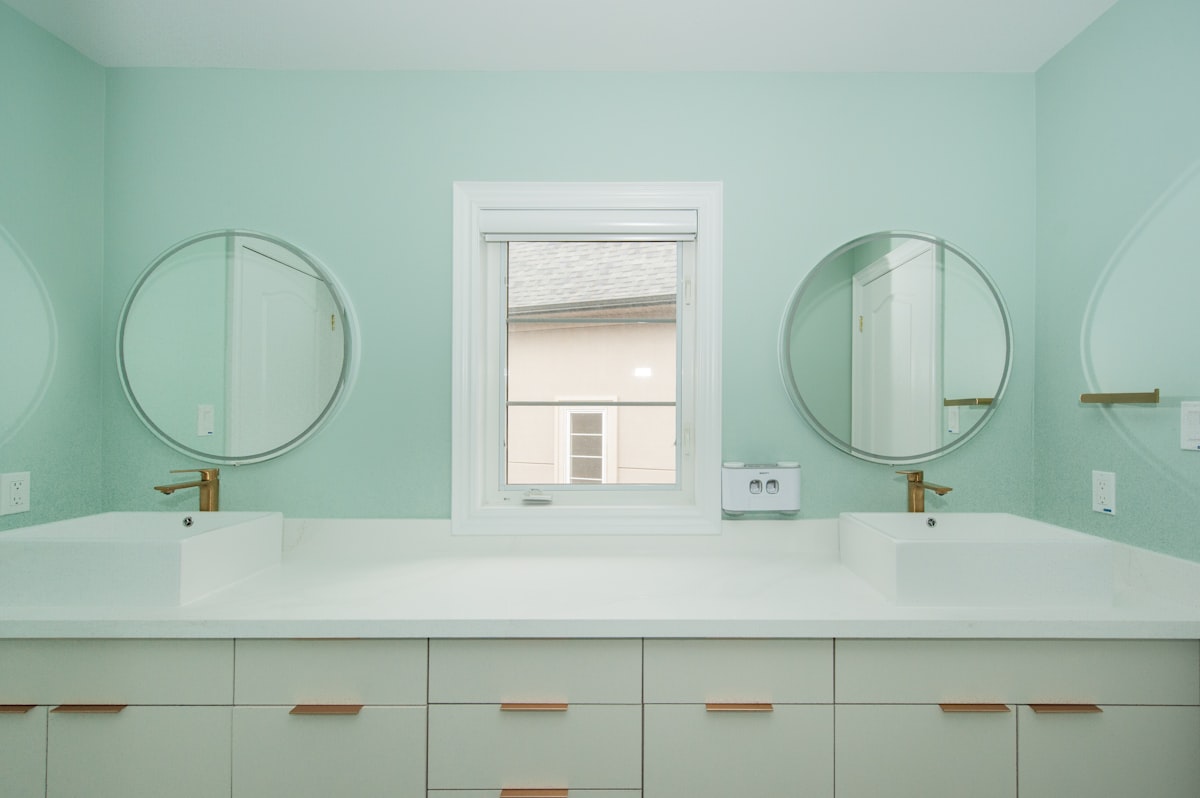
Illustrative stock photograph of bathroom basins; not a Telford customer job.

Tap & Toilet Repairs

Dripping taps and malfunctioning toilets are among the most frequently reported household plumbing faults in the UK. While they can appear trivial, a continuously dripping tap or a toilet cistern that refills and runs constantly wastes a measurable volume of water, and on a metered supply this adds to household costs over time.

Identifying the specific component at fault is the starting point for an effective repair. Tap faults most commonly come down to worn internal components.

Traditional pillar taps β€” the type that require multiple turns to open and close β€” use a rubber washer that seats against a valve face. Over time the washer compresses, hardens, and loses its seal, allowing water to drip through even when the tap is fully closed.

Quarter-turn taps, which are common in modern plumbing, use a ceramic cartridge instead. These can develop a drip when the ceramic discs chip or when the cartridge body cracks.

O-ring seals on the spindle can also fail, causing water to escape from around the handle rather than the spout. Toilet faults divide into cistern problems and pan problems.

A toilet that runs continuously β€” where water can be heard flowing into the pan after the cistern has refilled β€” usually has a worn float valve or a deteriorated flush valve seal. A toilet that flushes weakly or incompletely may have a blocked rim, a failing siphon, or a partially blocked soil pipe.

A leak at the base of the pan β€” visible as moisture around the floor β€” indicates a failed pan-to-floor seal or a cracked connection to the soil pipe. When carrying out tap or toilet repairs, a plumber will also check whether the isolation valves on the local supply pipes are functioning.

These small valves allow individual fixtures to be shut off without affecting the rest of the property. If they are seized or absent, replacing them at the same time as the main repair is practical and reduces disruption for any future work on the same fixture.

Specialist Services We Offer

Signs your taps or toilet need attention

⚠️

Audible or visible drip from a closed tap

A tap that drips when fully closed has a worn internal seal β€” either a rubber washer or ceramic cartridge. The rate of drip typically worsens over time as the component continues to deteriorate, so it is worth addressing before it becomes a constant flow.

⚠️

Continuous sound of water entering the cistern

A toilet cistern that refills repeatedly without having been flushed, or one you can hear running into the pan, has a fault with the float valve or flush valve seal. This represents continuous water wastage and the fault does not resolve on its own.

⚠️

Moisture or staining around the base of the toilet

Any sign of water at floor level around a toilet pan β€” whether a puddle, damp flooring, or mineral staining β€” should be investigated. It can indicate a failed pan seal, a cracked connection, or in some cases a condensation issue. Left unaddressed, water at the base of a toilet can damage the subfloor.

How tap and toilet repairs are carried out

1

Isolate the supply and inspect the fixture

The water supply to the affected tap or toilet is closed at the nearest service valve or at the stopcock. The plumber inspects the fixture to confirm the specific fault β€” a worn washer, a faulty cartridge, a failed float valve, or another component β€” before sourcing the correct replacement part.

2

Replace the faulty component

The appropriate part is replaced: a rubber washer, O-ring, ceramic cartridge, float valve, or flush valve seal depending on what the inspection found. Common components are typically carried as stock; less standard parts may need to be ordered for older or unusual fixtures.

3

Test, adjust, and check isolation valves

After the repair the supply is restored, the fixture is tested under operating conditions, and any cistern water levels are adjusted as required. The plumber also checks that the local isolation valves are functional, and replaces any that are seized or missing to make future maintenance easier.

FAQs About Tap & Toilet Repairs

How do I know if my tap uses a rubber washer or a ceramic cartridge?
Taps that require several full turns of the handle to move from fully closed to fully open generally use a rubber washer and gland assembly. Taps where the handle moves only a quarter turn β€” ninety degrees β€” to open and close use a ceramic disc cartridge. If you are unsure, a plumber can confirm the type during the initial inspection.
Why does my toilet keep running after flushing?
A continuously running toilet is most commonly caused by a worn float valve that allows water to keep entering the cistern past its fill level, or by a failed flush valve seal that allows water to seep continuously from the cistern into the pan. Both faults are addressed by replacing the relevant internal component, which is a straightforward repair in most modern cisterns.
Is it worth repairing an old tap, or should I replace it?
A plumber can advise after inspecting the tap. For taps in otherwise good condition, replacing a worn washer or ceramic cartridge is cost-effective and restores full function. If the tap body is corroded, if replacement parts are no longer available for that model, or if the tap is very old, replacement may be more practical. The decision depends on the specific fixture.
What causes a toilet to leak at the base?
Moisture around the base of a toilet pan most often indicates a failed wax or rubber seal between the pan outlet and the soil pipe or floor flange. It can also result from a crack in the base of the pan itself, or from condensation on a cold pan in a poorly ventilated bathroom. A plumber should inspect the cause, as a failed pan seal requires lifting and refitting the toilet to replace the seal correctly.
What details should I describe when reporting a dripping tap to help the plumber assess the repair?
Note whether the drip comes from the spout or from around the handle or base of the tap, whether it affects the hot supply, the cold supply, or both, and how quickly the drip has worsened. If the make or model is visible on the tap body, noting this can help establish whether replacement parts are likely to be available. Describing the type of handle movement, whether it turns through multiple rotations or only a quarter turn, is also useful.
Why does a toilet sometimes make a loud hissing or rumbling noise while the cistern refills?
A pronounced hissing sound during cistern refill often indicates that the fill valve is partially worn or the water inlet is partially restricted, causing turbulence as water enters under pressure. A rumbling noise can be associated with high incoming water pressure forcing water through a restricting valve. A plumber can inspect the fill valve and supply pressure to identify whether the component needs adjustment or replacement.

Plumbing Services Across Telford

Request a Free Quote

Tell us what you need and we'll get back to you with a no-obligation quote.

01952 000000 (placeholder - not in service)
Use the enquiry form; the telephone number is a placeholder.
Covering Telford and surrounding areas

Quick quote request

πŸ“ž Call Now πŸ’¬ Enquire